
Why do contractors never send the estimate, and what does that silence cost you?
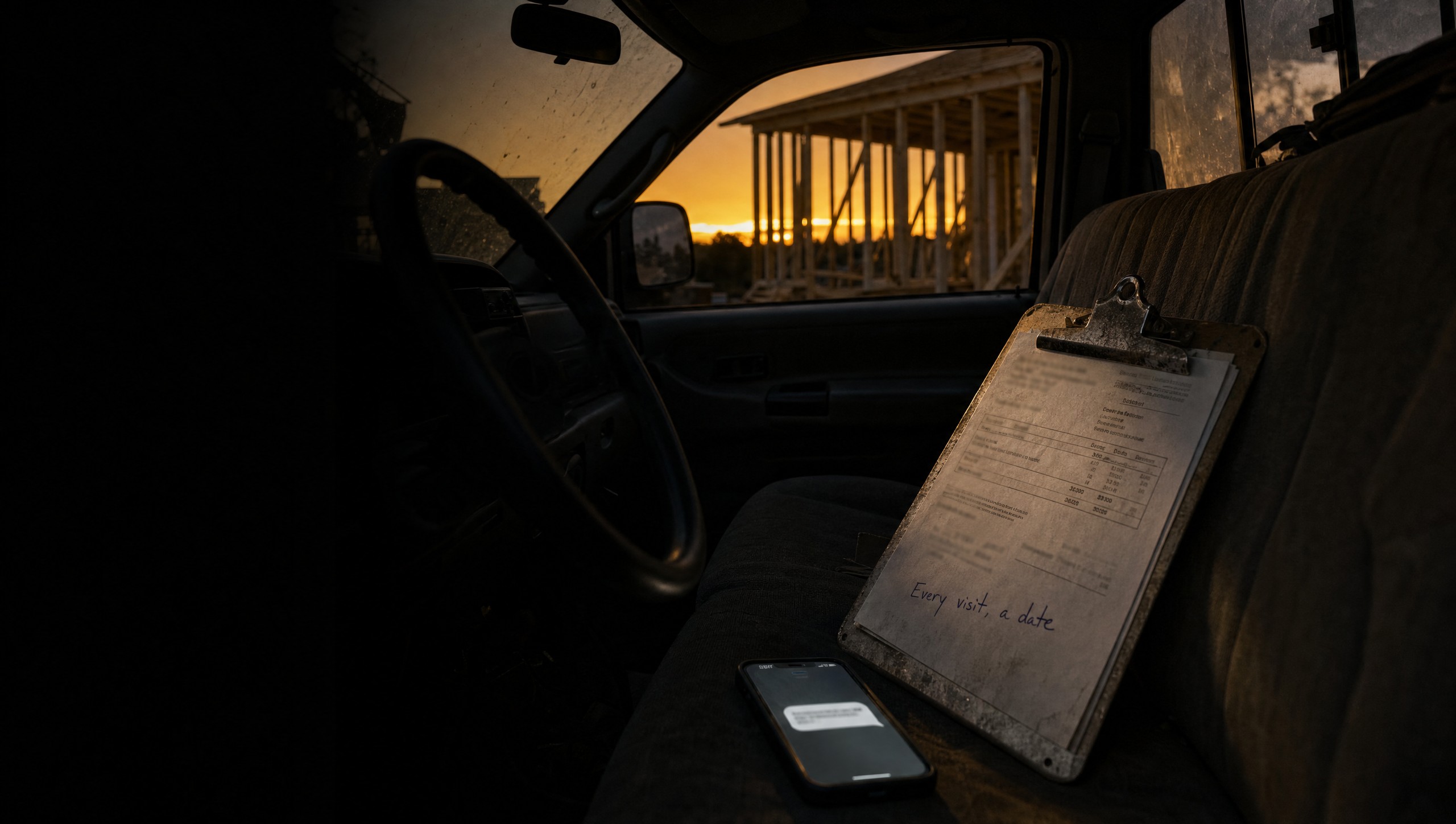
AI-written from the Perplexity brief. Grant did not answer. AI means software that creates text from instructions.
WHY: What does silence cost?
A homeowner posted this week about two contractors. Both looked at her porch job. Both promised an estimate. Neither sent one. Other homeowners in the thread chimed in with the same experience. Quotes they waited on. Calls that never came. Read the thread on r/HomeImprovement.
That story shows what one homeowner saw. It does not say why those contractors went quiet. It does not say if she hired anyone else, or what the lost job was worth.
The market adds pressure. CNBC reports that remodeling permits are stagnant. Spending should stay near $525 billion through late 2027. Read CNBC's report.
Pending home sales hit a record low in September. Mortgage rates sit near 7.24%. See Ground News and Move With Momentum. Those numbers describe housing. They do not prove your lead list shrank.
You can measure what ghosting costs your shop without guessing. Pull every visit you made over the past year that still has no estimate attached. Tally the hours spent driving, walking the job, and writing notes. Then tally the jobs you won from the visits you did quote. The gap between those two totals is your follow-up gap, in hours you paid for and jobs you never pursued.
In a market where permits are flat and every lead counts, those lost hours matter more than they did when jobs were easy to find.
WHAT: Separate the follow-up gap from the cause
The follow-up gap is the space between a homeowner's call or visit and a clear next step from you. It covers a missing estimate, no update on timing, or no answer after the estimate lands.
This describes the gap, not the cause. In most shops the cause is ordinary. Field work outranks office work. One person, usually the owner, writes every estimate. Nobody owns the next step after the visit. Writing an estimate also costs your time. That does not tell you if a lead is serious, or if every visit deserves a full proposal.
Name your likely cause. Write it next to the gap you found in your records. Cause and cost now sit on the same page.
HOW: Check your process before blaming the market
Start with your records, not the story you tell yourself about the lead. Check each recent inquiry and site visit. Mark which ones got an estimate, a clear update, or no reply.
Find where estimates stop
Check the path: first inquiry, site visit, estimate prep, estimate delivery, homeowner reply. Mark the last step you can confirm for each open job.
This shows whether estimates never got written, got written but not sent, or went out with no next step. It cannot tell you the reason until you ask your team.
Then make writing faster. A small shop stops leads from going cold by shortening the estimate itself. Keep a standard scope of work for your common jobs. Build a short list of your usual line items and prices. The estimate then takes hours, not evenings, and a fast estimate is one you send.
Decide who owns the next action
Decide who owns the next action for each inquiry and estimate. Write that name down. Then write the next step the homeowner can expect.
If that person is on a job site, decide how the team records the task for later.
Without an office manager, aim to reply the same day you hear about the job. Two sentences cover it: confirm you received the inquiry, then name the day you will call. Set a fixed time each day to clear new inquiries, such as first thing in the morning or right after the crew leaves. A same-day reply beats a perfect reply three days later.
Ask lead questions, not lead labels
Calling someone a "tire kicker" does not say what they need or whether the job fits your scope. Four questions separate real buyers from lookers before you spend an evening on a quote. Ask for a budget range. Ask for the hoped-for start date. Ask who decides on the project. Ask whether the scope has been set. Real buyers can answer all four. Write the answers on the lead record.
If a lead cannot answer, say so plainly and offer to follow up when the scope is clearer. That costs you five minutes instead of an evening.
Keep market conditions in perspective
A flat market does not mean no good projects exist. CNBC describes broad conditions: stagnant permits and spending near $525 billion through late 2027. It does not describe your pipeline.
The frozen-market story gets one thing wrong for remodelers. Homeowners who cannot move still improve the home they stay in. A family that keeps a house because rates sit near 7.24% still needs the kitchen, the porch, or the addition. The work has not disappeared. It has changed shape.
In a market that hands out fewer jobs, owners play offense on follow-up. Faster estimates, quicker replies, and tighter lead sorting win jobs that used to arrive on their own. Treat speed as your marketing budget.
Pick a tracking method your team will use
The method can be a shared digital record or a paper log. Either way, record the homeowner, the job, the estimate status, who owns it, and the next action.
The cheapest system that fixes follow-up for good is a lead list with an owner and a date on every row. A shared spreadsheet or a whiteboard works. One person reviews the list at the same time every week. Each lead leaves the review with a named next step. That rhythm, not software, is the fix.
IF: Pick one step and check it
If estimates got written but not sent, look at the handoff from prep to send. If estimates went out with no next step, review who owns the reply. If calls never become visits, check what your team asks first.
Those are places to look, not promised fixes. Your records must show where the gap occurs before you pick a change.
If you fix one step this quarter, fix the send. An estimate that sits unsent earns nothing. The work is finished, the homeowner is left waiting, and the job goes to whichever shop answered first. Sending costs nothing. It pays back the fastest.
For a starting point on your business needs, take the Skill Match assessment.
This week, review your open estimates and mark the last confirmed step for each one.